
Southfield Previous Residents by Era
No single collection identifies every past household at a Southfield address. Land records establish a title trail, while directories and census schedules supply evidence about people associated with the place at a point in time. Begin with the era you need, then use the property’s PIN and legal description to keep the address trail from breaking when a street number, municipal label, or subdivision description differs across sources.
| Source | Years It Covers | Where Held | What It Shows |
|---|---|---|---|
| Oakland Super Index property documents | January 1, 1964 to current online copies | Oakland County Clerk/Register of Deeds | Recorded deeds, mortgages, foreclosures, parties, dates, and property filings. |
| Manual tract and grantor-grantee books | 1800s to current, exact parcel series varies | Pontiac Tract Index and records retention | Older ownership chain, legal descriptions, plats, mortgage tracking, and instruments. |
| Bresser South Oakland County | 1978 to 1996; a local inventory also lists 2007 to 2008 | Henry Ford Centennial Library inventory, availability to verify | Street-number listings, head of household, phone, tenure notation, and movement clues. |
| Polk South Oakland County | 1997 to 1998 located; other local years not confirmed | Henry Ford inventory and broader Library of Michigan Polk holdings | Name, household, occupation, address, and owner or renter convention where supplied. |
| Federal census | 1790 to 1950 public | National Archives and library databases | Enumerated household members, ages, birthplaces, and address or neighborhood clues. |
| Southfield permits and cemetery records | Current online permit route; cemetery graves date to the 1830s | BS&A/Building Department and City Park Services | Project timing, applicants where public, or an interment and death endpoint. |
For a recent ownership question, start with the parcel and deed. For an occupant question in the Bresser or Polk periods, start with the street directory and check the name section. For an older household, pair a nearby directory issue with the census, then use deeds, newspapers, cemetery material, or probate as supporting evidence.
Southfield Previous Residents Deed Chain
A chain of title is the ownership path behind one parcel. Start with the current Southfield situs address in Property Gateway, not with a mailing address. Record the PIN, legal description, current owner, mailing address, subdivision, and any displayed exemption or status. The situs is the physical parcel. A mailing address is simply the place for tax notices, so it can be useful to distinguish an absentee owner without proving where that person lived.
- Search Property Gateway by address or PIN, then copy the PIN and legal description exactly. A valid PIN commonly appears in a ten-digit pattern, with dashes optional.
- Use that PIN or legal description in Oakland County Super Index to locate the current or latest recorded deed. Note the grantee, grantor, recording date, document number, and all cross-references.
- Search the prior grantor as a grantee for the same PIN or legal description. This finds that seller’s earlier acquisition rather than assuming a surname is unique.
- Repeat the sequence deed by deed. Compare lot, block, subdivision, condominium unit, or metes-and-bounds language whenever the street address drops out of a document.
- Take the same legal description to the Tract Index when the online path ends, the parcel was split, or an older transfer needs a manual grantor-grantee or plat search.
Oakland County reports that Super Index copies begin January 1, 1964, except subdivision plat maps. That is an online-copy cutoff, not proof that older deeds vanished. Manual books, retention records, and archival material can reach back into the 1800s. The county counter, staff, mail copies, and the Tract Index are the correct fallback instead of treating the first online result as the start of ownership.
- Grantor and grantee
- The grantor transfers an interest in the property. The grantee receives it. Each role is recorded for one document and may reverse on the prior deed.
- Chain of title
- The linked succession of recorded transfers for a parcel. It documents ownership history, not a full list of every occupant.
- Criss-cross directory
- A city directory arranged by street and house number. It is useful for finding a listed household after the address is known.
- Enumeration district
- The small census area assigned to enumerators. It helps when a name search fails and a street or neighboring family is known.
Southfield Previous Residents Before 1964
Before the computer database begins, the stable route is the legal description. Tract Index staff can search history by Sidwell or PIN, subdivision lot, condominium unit, or metes-and-bounds description. The office maintains information about plats and historical ownership and offers county map products. A street number can be absent from an older instrument, but the lot, block, or tract language often survives. County copies may be ordered in person or by mail, and the county publishes a counter route for older holdings.
Do not invent a street-renumbering explanation when two sources disagree. No official source located a particular citywide Southfield renumbering year. Compare a plat, cross streets, the legal description, historic maps, and the PIN. Southfield began as a township and became a city in 1958. An old directory may therefore use “Southfield Township,” “Southfield,” or a neighboring postal city while the land record remains in Oakland County.
The Southfield Library and Library of Michigan provide other bridges when a deed search stops. The Oakland guide lists an 1845 state census, marriage records from 1827 to 1849, probate abstracts from 1822 to 1868, naturalizations from 1827 to 1906, newspapers, maps, and atlases. A missing record calls for an exact collection check, not a claim that a courthouse disaster erased a known decade. Research did not locate a named Southfield courthouse fire or flood that created such a gap.
Southfield Previous Residents in Directories
Directories help answer the household side of a house history. In the Bresser years, look up the street and number first, then inspect the listed head of household, phone, owner or renter notation, first-year listing, new-arrival mark, or within-area move. Polk can be read in both directions: its street pages put entries in house-number order, while its surname pages can add an occupation, spouse, other household members, and an ownership notation where the publisher supplied one.
Bresser South Oakland County was located for 1978 through 1996, and Polk South Oakland County for 1997 through 1998. The Library of Michigan also holds broader Polk material, while the Burton Historical Collection has Detroit and regional directories for selected periods from the nineteenth century into the 1970s. Check every volume’s geographic scope before treating a missing Southfield address as a negative result. Directory titles, publishers, and suburban coverage are not a continuous series.
Southfield Public Library is the local reference route for genealogy databases, newspapers, historical images, cemetery resources, and directory help. Its Reference Desk can identify whether a particular volume, yearbook, obituary, or local-history item is available. The Southfield Historical Society’s Town Hall Museum in the Burgh Historic District holds township-era material and historic-home context that may never have been digitized.
Southfield Cemetery, maintained by City Park Services, has graves dating to the 1830s but no public online interment index was located. Request a lookup when a burial clue is known, then compare it with a death record or obituary. Newspaper research can add a move, death notice, building announcement, or civic reference: the Southfield Newsette began in 1937, and Library of Michigan holdings include the Oakland Press from 1972 through 2019.
Southfield Previous Residents and Census
Pair a directory year with the closest public federal census year to turn an address lead into a household record. Directories are useful for annual movement and street order. The census can name people enumerated together, along with age, birthplace, and other household facts. The open federal endpoint is 1950 because schedules are released after 72 years. Earlier public years can be searched by name and location, but the image deserves a check when the index is unclear.
Use the National Archives 1950 Census search for the current public census endpoint and its name, location, and enumeration-district routes.
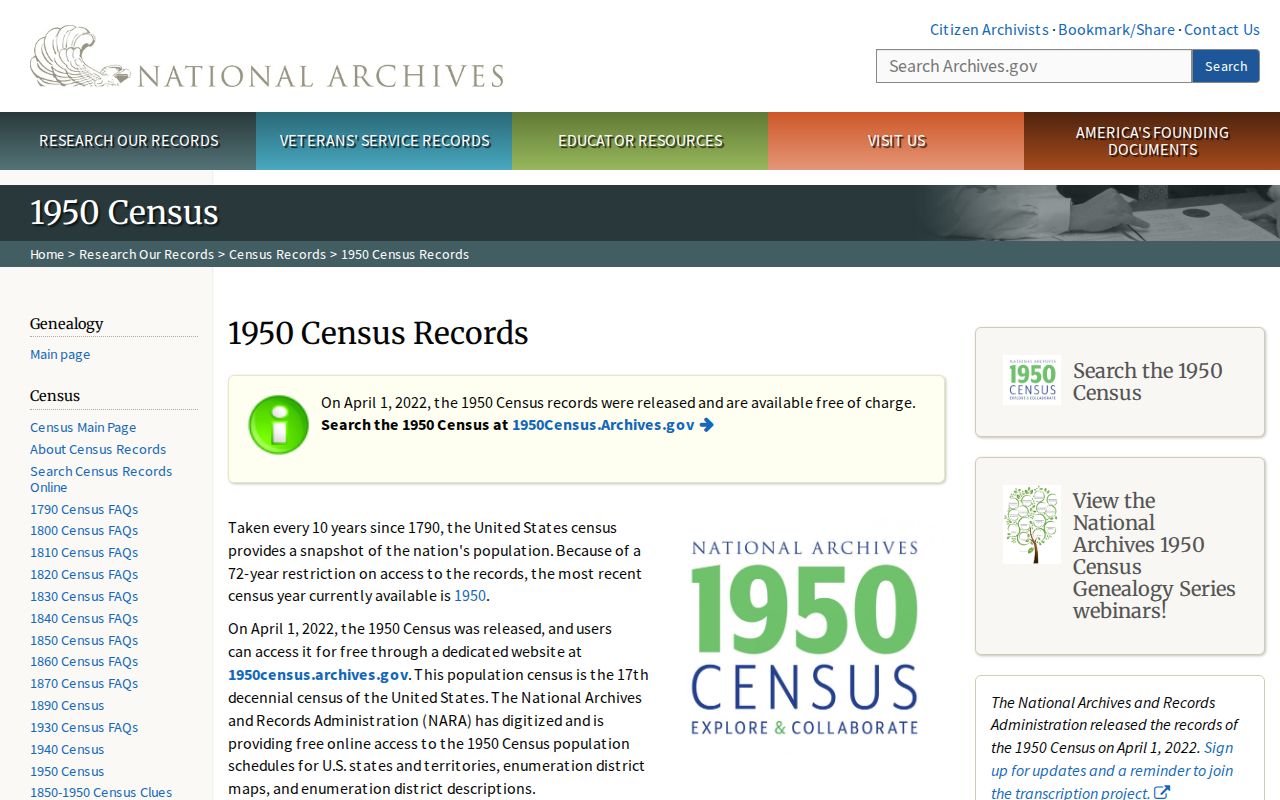
When a name does not appear in a search result, browse the likely enumeration district, street, nearby surnames, and the original census image. Pairing the results does not erase the gap between an annual directory and a census date. It gives a time-bounded household clue that should be compared with the property chain and any obituary, probate, cemetery, or newspaper evidence.
Southfield Previous Residents Permit Trail
Permit and planning material can date changes to a house without proving who occupied it. Southfield Building uses BS&A for permit applications and inspection requests, while Planning uses the same route for matters such as site plans, fences, landscaping, tree removal, zoning letters, rezoning, special land use, and street or alley vacations. The public result fields and the historical cutoff were not confirmed in research. Request a specific address, project type, and date range through the city portal, counter, or a focused FOIA request rather than assuming an online search covers every older project.
Southfield Previous Residents Fallbacks
House-history support is spread across local institutions instead of a single city file. Give the Southfield Public Library or Historical Society the legal description, former owner, and approximate year, not just a present street number. The library can direct researchers to genealogy databases, newspapers, images, cemetery resources, maps, and local history. Southfield Cemetery can provide a burial clue through City Park Services, while the Library of Michigan Oakland guide offers probate, naturalization, marriage, census, map, and atlas leads. When an address appears different in an older source, use plats, cross streets, and the county PIN before proposing a renumbering.
Southfield Previous Residents Research Limits
Former ownership and former occupancy are different questions. A deed can establish a dated transfer, and a directory can report a publisher’s listed household, but neither creates a complete record of everyone who lived at an address. A permit may supply a project date or applicant where it is public. Cemetery and obituary material can point to a death or family connection. Probate can identify heirs or fiduciaries, subject to the court’s access rules. Use names and dates from one collection to look for confirmation in another.
Protected addresses, sealed records, juvenile files, DMV data, utility accounts, delivery records, and Michigan Address Confidentiality Program information are not ordinary house-history sources. Use the custodian that owns the record when a correction is needed. Oakland County FOIA can be used for county administrative records, but court records are obtained from the court, and records already directly available through the land or vital-record office should be requested from that custodian.
Use the past responsibly. Southfield house-history research is appropriate for family history, estate work, preserving a property story, and personal curiosity. Do not use an older address trail to stalk, harass, intimidate, or harm a living person.